It’s easy to get overwhelmed trying to add “just one nice feature” to your backyard. You want something thoughtful, stylish, and calming—but not another project that takes three weekends and a contractor’s phone number to finish. The problem? Most outdoor focal points either demand too much attention or too much effort.
That’s where a sphere fountain makes sense. It’s low-maintenance, easy to install, and actually looks like it belongs in your yard. In this blog, we’ll cover what makes sphere fountains such a smart choice, who they’re best suited for, where they work well, and what to expect from installation and upkeep. If you’re the kind of homeowner who wants a little structure and a lot less chaos, keep reading.
What Makes a Sphere Fountain Appealing
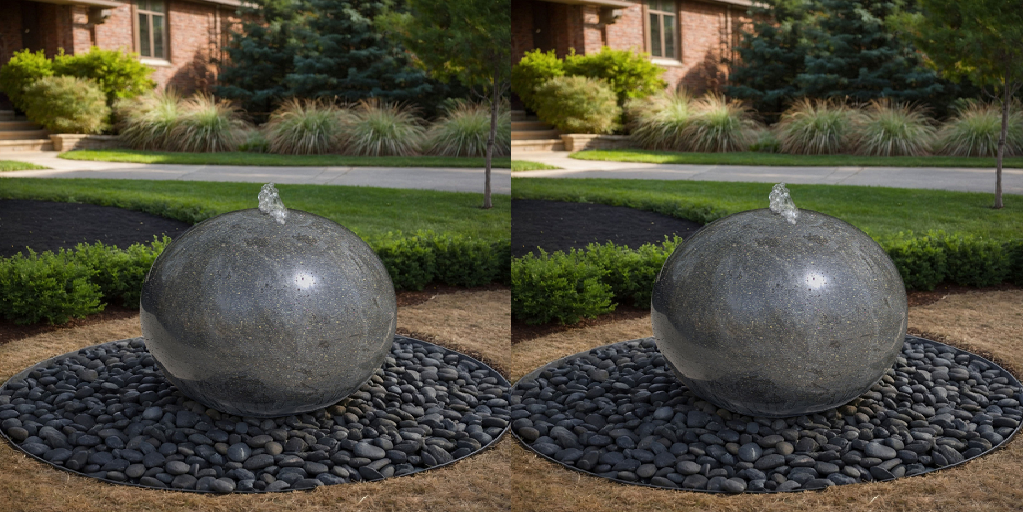
Let’s start with the obvious: it looks clean. A polished sphere with a gentle water flow feels balanced and steady, like the kind of outdoor feature that understands the assignment. It doesn’t need to dominate the yard—it just holds its own quietly.
For people who like things in their place (plants trimmed, patio swept, chairs arranged just so), a sphere fountain feels like the right kind of centerpiece. No fuss. No noise. Just a grounded element that plays nicely with everything else in the space.
What Type of Homeowner Actually Buys One?
This isn’t for someone who wants big, theatrical water shows. It’s for the planner. The weekend gardener. The person who took a month to pick the right pavers and knows exactly which tree they want to frame the seating area. It’s for homeowners who want a sense of flow in their outdoor space—literally and visually.
- The first-time homeowner who’s gradually upgrading the yard
- The DIY enthusiast who just finished their last hardscape project and needs a focal point
- The suburban calm-seeker who wants less noise, more intention
- The retired hobbyist who appreciates structure and soft background sound
A sphere fountain doesn’t try too hard, and neither do the people who usually install them.
Where It Works Best
Sphere fountains are surprisingly adaptable. Whether it’s a modern patio, a traditional lawn, or a tucked-away zen corner, they land well in:
- Gravel gardens where you need a little motion
- Near entryways to add polish and intention
- Center of a small lawn where nothing else fits
- Flanked by planters to soften hard edges
- Backyard nooks where quiet is the goal
They’re compact enough to work in tight spaces but striking enough to anchor an open one.
What to Know Before Installing One
Most sphere fountains come as part of a kit—pump, basin, tubing, and the fountain piece itself. No mystery plumbing, no expensive concrete pads, and no need for a landscape architect. A level base, a grounded outlet, and a couple of hours are typically all it takes.
Maintenance is minimal. Just keep the pump clear, check the water level now and then, and decide whether you want to let it patina naturally or keep it polished. That’s about it. Compared to a pond or multi-level waterfall, it’s refreshingly straightforward.
A Smart Option for Subtle Impact
It’s easy to overthink backyard features. But if your goal is simplicity, ease, and a little style, a sphere fountain does the job. It’s the kind of outdoor piece that works with the space rather than asking for all the attention.
And let’s be honest—if you’re the type who wants to be done with a weekend install before lunch on Sunday, this is your kind of project.
Where to Find the Good Ones
Quality matters. You want a fountain that’s made of solid materials, has a reliable pump, and isn’t going to wobble after one season. That’s where Blue Thumb comes in. Their selection of sphere fountains and DIY kits makes it easier for homeowners to pick something that fits the space and install it without second-guessing every part.
No frills. No drama. Just one smooth, solid water feature that doesn’t ask for attention—but gets it anyway.