Even if you’re not an electrical engineer, it’s still helpful to be familiar with most if not all of the following electrical-adjacent terms.
See if you know them all.
Wire
A thin rod or filament of drawn metal, used as an electrical conductor. Often, electrical wires are made of copper or aluminum as these metals offer high conductivity and low resistance. A wire can be single-stranded or braided. A 600 volt wire or cable rating is common for many applications.
Cable
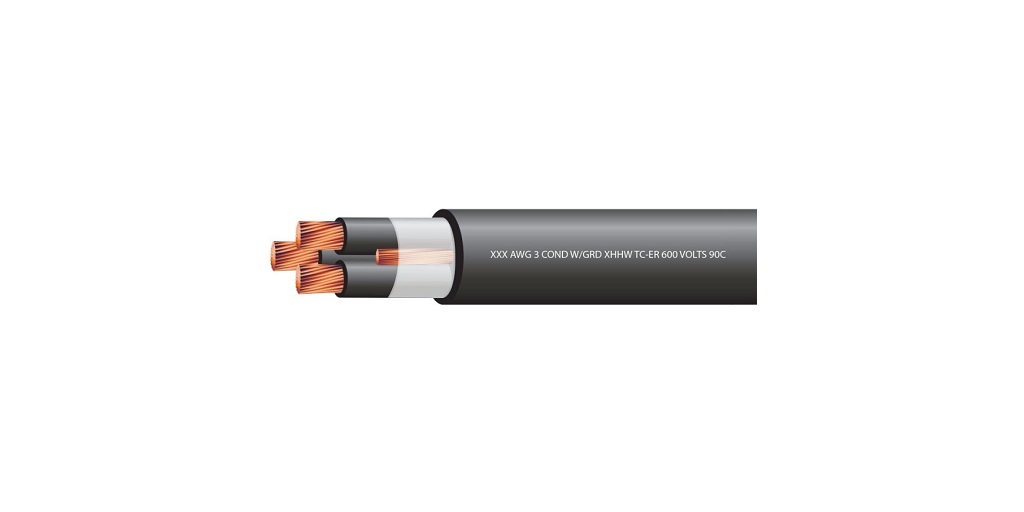
A cable is a group of individually insulated wires that run in parallel under a common sheath.
Volts (Electrical Potential)
Voltage, measured in volts, communicates electrical potential, which is the force with which a current is “pushed” through a conductor. Anything under 110V is considered low voltage, whereas applications above 1,000V are considered high voltage. A common rating for building wire is 600 volt wire.
Amps (Current)
Amperage, measured in amperes or amps (A), measures current, which accounts for the total amount of electrons flowing through a circuit.
Watts
Wattage is a measurement of power. The higher the wattage of an appliance or application, the more energy is consumed per unit time.
Resistance
Resistance or resistivity, measured in ohms (Ω), gives a quantitative assessment of how much a material pushes back against the electrons flowing through it. Low-resistance conductors are useful as wires and cables, high-resistance conductors are not because they overheat.
Circuit
A circuit is a loop around which electrons flow. The circuit must be closed for electricity to flow. If the circuit is open or there is a “short,” there will be an electrical fault and the appliance or device will not work.
Conduit
Conduit is a sheath that is used to communicate electrical wires and cables. Conduits can be mounted behind the walls or above the ceilings in buildings, and some conduits are approved for direct burial. Conduits support and protect enclosed wire and cable from the elements and against electromagnetic interference, or EMI.
Grounding Conductor (Ground)
A ground is a conductor, usually either bare copper or with green insulation, that helps to divert excess voltage and current away from the circuit and into the earth in the event of a voltage spike, such as during a lightning strike.
Gauge (Such as American Wire Gauge, or AWG)
Gauge is the diameter of a wire, usually measured in an even number. Larger diameter wires can carry greater current and voltage for longer distances. The most common wire gauge in the United States is American Wire Gauge, or AWG, which is an inverse measurement, so as the gauge gets smaller, the diameter gets bigger.
Insulation
Insulation is the material that is used to encase electrical conductors. There are many different types of electrical wire insulation, including but not limited to nylon, polyethylene, polypropylene, EPDM, PVC, ETFE, and PTFE. These materials protect the electrical wires from a variety of environmental, chemical, and electrical influences, such as moisture, sunlight, acid, ozone, and electromagnetic interference.
Load Center
The load center is the point of origin of electrical energy within a building or system. Typically, the circuit breaker is located by the load center.
Want to Learn More About Electrical Wire and Cable?
If you’re interested in learning more about these electrical terms or only need to find high-quality 600 volt wire and cable for general electrical applications, visit EWCS Wire at EWCSWire.com.
They carry a wide range of electrical wire and cable, including specialty wire and cable such as marine battery cable and welding cable. Visit their website or contact them at Sales@EWCSWire.com for more information.