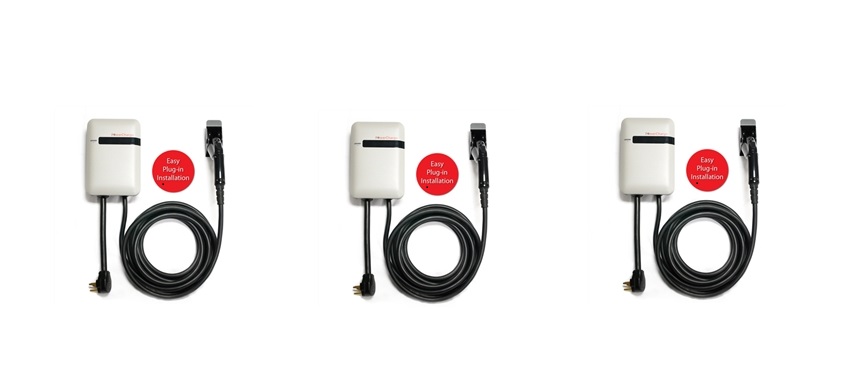
Electric vehicles, or EVs, are becoming increasingly popular on the roads, and as a result, we are collectively experiencing a critical need to improve our electrical infrastructure. For those of us that own electric vehicles, this, in part, requires us to be prepared with efficient and capable charging solutions.
Though there are many various charging options available, these EV chargers (level 2) are ideal for many as a result of their versatility and widespread adoption. However, it is important to understand the charge output range of Level 2 chargers and when to utilize each level effectively.
Level 2 EV chargers typically operate within a range of charging speeds, denoted in kilowatts (kW). This range can vary from as low as 3.3 kW to as high as 19.2 kW or even more, depending on the specific charger model and its configuration. Understanding the charge output range is essential for EV owners to optimize their charging experience based on their needs and circumstances.
1. Low Output (3.3 kW – 7.2 kW):
- Low-output Level 2 chargers are usually considered the best option for residential settings and workplaces. They are typically rated between 3.3 kW to 7.2 kW. These chargers offer a relatively slow charging speed, somewhere around 12 to 25 miles of range per hour of charge, but are suitable for overnight charging or extended periods of parking, such as during a workday.
- These Level 2 chargers are ideal for EV owners who have predictable daily commuting patterns which allow plenty of time charging at low speeds. Overnight charging with a low-output Level 2 charger can fully replenish the battery of many electric vehicles, providing sufficient range for the next day’s travels.
2. Medium Output (7.2 kW – 11 kW):
- Medium-output Level 2 chargers offer a decent balance between charging speed and convenience. These Level 2 chargers typically range from 7.2 kW to 11 kW. They are commonly found in public charging stations, commercial parking lots, and shopping centers.
- These chargers offer faster charging than low-output chargers and can deliver between 25 to 40 miles of range per hour of charge, making them suitable for situations where EV owners need a quicker top-up while running errands or during shorter stops. They are also practical for residential installations where faster charging is desired without requiring specialized high-power electrical infrastructure.
3. High Output (11 kW and above):
- High-output Level 2 EV chargers are typically rated at 11 kW to 19kW and are designed for rapid charging in high-demand environments. They are commonly installed in fleet depots, public charging networks, highway rest stops, and locations where EV drivers will stop for short periods of time and require swift charging.
- These chargers provide significantly faster charging speeds up to 45 to 80 miles of range per hour of charge and enable EV owners to replenish a substantial portion of their battery capacity in a relatively short time. High-output Level 2 chargers are particularly useful for long-distance travel, allowing drivers to efficiently top up their batteries during breaks without needing to wait for extended periods.
Determining which type of EV charger (level 2) to buy to use depends on various factors, including the available charging infrastructure, the power limitations of the vehicle, and the driver’s lifestyle and schedule. How much time is available to allow for a charge is also a consideration that drivers must take.
For most everyday charging needs, such as overnight charging at home or during work hours, low or medium-output Level 2 chargers are usually sufficient and cost-effective.
On the other hand, high-output Level 2 chargers are invaluable for situations that demand rapid charging, such as long journeys or when time is in short supply. However, high-output chargers are rarely suitable for homeowners and individual EV owners.
Because there is a wide charge output range of Level 2 EV chargers, they offer flexibility and adaptability to suit the diverse charging requirements of different users.
By understanding the capabilities of each level of charger and when to use them effectively, EV owners can optimize their charging experience to suit their lifestyle and travel needs, with respect to what is available to them.