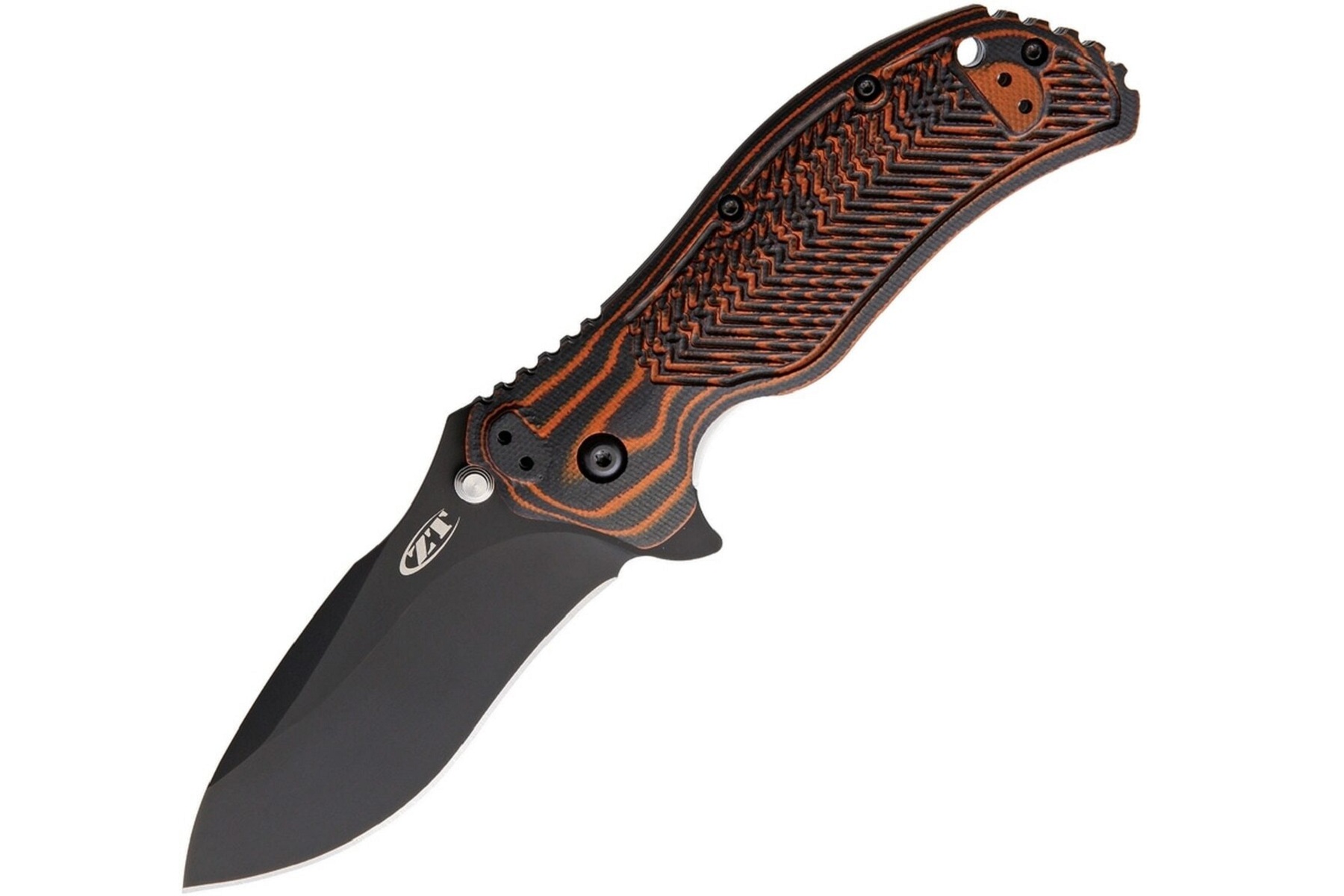
Zero Tolerance Knives, also known as ZT Knives, may be well known for their memorable blade designs, rugged dependability and artful use of high-end, even super steels, but every edge wears down from time to time. Whether you’ve gotten a good six months of breaking down boxes or just a few days or a week of processing wood, you’re going to need to send that edge to the stone sooner or later.
There are fancy machines and “systems” that you can use to restore a worn and weathered edge, and some of these really are extremely convenient and effective. There’s a simple truth underlying this, however. You can get any knife as sharp as you want with just a few skills and a stone with the proper grit. You don’t need angle guides or fancy, multi-directional, micro-serrated rods or whatever they call them.
No, if your Zero Tolerance pocket knife is showing signs of wear and you want to bring it back to hair-popping glory, you just need the right stones, and to know what you’re doing.
First, carefully inspect the edge of your knife. If it is still sharp, but not sharp enough to glide through paper, you’ll probably only need two stones for the job. If it’s approaching butter knife levels of dullness, you’ll need three or even four.
In ascending order of fineness, you’ll want 400 and 600 grit stones, as well as a stone with a grit rating between 1,000 and 1,200. For finishing the edge, you’ll want a stone that’s rated between 3,000 to 5,000 grit. If you’re using natural stones, a soft Arkansas stone is approximately 1,000 grit and a hard black Arkansas stone is approximately 2,000 to 4,000 grit.
If your knife is very dull, start with 400 or 600 grit stones; if it just needs to be touched up, start with the 1,000 grit stone. Use either water or an oil to treat the surface of the stone, but remember, if you start with oil, you’ll only ever be able to use oil again. These liquids will help to suspend the particles of steel stock removed from the edge so the stone remains efficient.
Lay the blade flat on the stone. Depending on the model of Zero Tolerance pocket knife that you own, this next part will vary, but for most models, lift the spine up about a centimeter off of the stone, keeping the edge in contact with it. That should produce an angle of around 20 degrees of contact between the edge and the stone.
Now, sweep the knife away from you, slowly, maintaining that angle of contact, as though you are trying to cut through the stone. You should feel a satisfying, slick sensation through the blade. This indicates that the stone has engaged the steel and is removing small amounts of the edge to restore it.
Continue this process until you can feel a burr along the edge. Turn the knife over and repeat the process until you have removed the burr on the other side. Then, progress to a finer stone, until you have repeated these processes with all three or four stones. By the end of it, you will have a razor sharp knife.
There you have it; now you can enjoy another few weeks or months with a brand new edge that will glide through obstacles like butter. If you found these tips helpful, check White Mountain Knives’ blog out, where you’ll find more of them, or get in touch with them for more help at WhiteMountainKnives@gmail.com.
For more information about Pocket Knife and Victorinox Swiss Army Knife Please visit : White Mountain Knives, LLC.