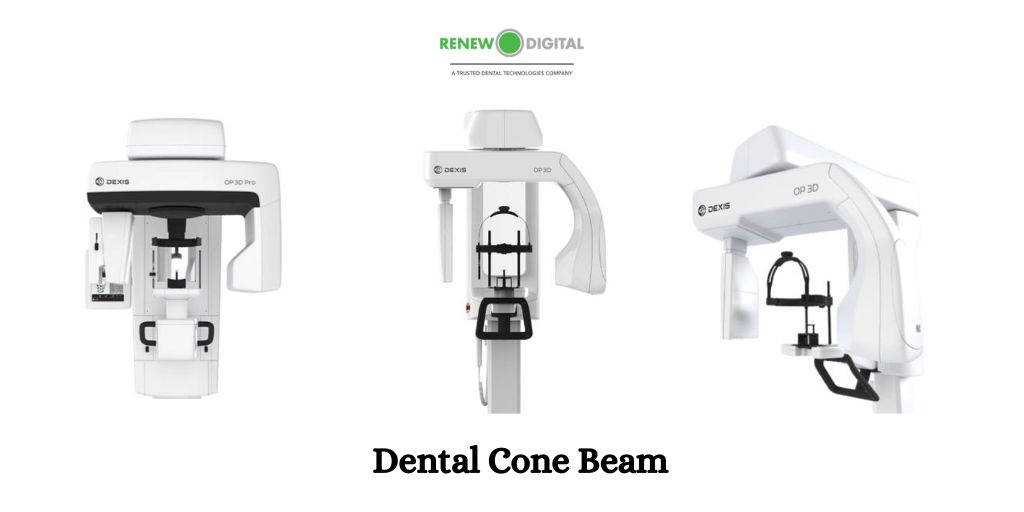
Dental cone beam computed tomography (CBCT) is an evolved class of dental radiographic technology that pushes the envelope of diagnostic capabilities through incredibly detailed 3-dimensional scans of anatomic structures, inclusive of both hard and soft tissues.
While imaging methodology for diagnosis and surgical treatment planning should be selected by case, ultimately, 2-dimensional alternatives, like panoramic imaging, are highly limited in their ability to capture scans of, and depict the details of, 3-dimensional structures.
Therefore, 3-dimensional cone beam technology is increasingly used in dental implant planning. Here are just a few of the potential use cases and issues it solves.
Implant Planning and Dental Cone Beam Computed Tomography
To begin this, let us state that the American Association of Oral and Maxillofacial Radiology has taken the position that cross-sectional views are highly recommended for dental implant planning; dental cone beam technology, with its highly detailed imaging capabilities, comparatively low radiation doses, and systems’ abilities to focus the scan on the area of interest all increase the value of CBCT for the application.
CBCT also provides insight into common complexities and complications that affect dental implant planning. For instance, a deep lingual undercut is a common feature of patients’ posterior mandibular region; this situation can be difficult to manage, and the detailed scans provided by cross-sectional CBCT imaging can help check angulation and ensure ideal drill positioning prior to implanting fixtures.
CBCT scans also can provide the detail necessary to ascertain the distance between the alveolar crest and mandibular canal so as to avoid damage to the inferior alveolar nerve during implant planning and placement.
Because of dental cone beam’s ability to accurately assess hard tissues as well as soft tissues, it can be indispensable to determine the quality as well as the density of the bone at the planned implant placement site, to ensure optimal placement, avoid damage, and minimize the risk of implant failure and retreatment.
Dental cone beam scans can also capture and display detail of nasopalatine morphology, particularly with respect to the nasopalatine canal and incisive foramen, specifically to determine the location of the patient’s nasopalatine nerve and descending nasopalatine artery. Implant contact with the nerve tissue can result in sensory dysfunction as well as implant failure, among other complications. Fortunately CBCT offers a viable avenue to help avert these issues.
In the event that the patient has had teeth extracted in the past, he or she may exhibit dimensional alterations to the alveolar process, namely, loss of bone. In this instance, additional precautions may be needed in selection of the implant site as well as during planning to avoid issues ultimately resulting in implant failure.
It is also the case that dental cone beam systems are useful in postoperative assessment to determine the progress of treatment as well as the condition of the implant.
Ultimately, the extremely high detail, ability to capture three-dimensional images, and low radiation dosages consistent with dental cone beam imaging protocols make it an indispensable tool to a dental professional, and one that is often highly appropriate for implant dentistry.
Save 30% to 50% Off Certified, Pre-Owned Dental Cone Beam Systems
Doctors planning on increasing the practice capabilities and service offerings shouldn’t be daunted by the high sticker prices of new dental cone beam imaging systems. For more than a decade, Renew Digital has saved its customers anywhere from 30% to 50% off the price of new systems by representing the top brands in certified, pre-owned CBCT systems.
Their inventory includes Planmeca, Sirona, Vatech, CS Dental and other CBCT systems, all at considerably lower prices than new, yet supported as if they were. Visit their website for more information or get in touch with them at 888-246-5611.
For more information about intraoral scanners and Planmeca Cbct Please visit : Renew Digital, LLC