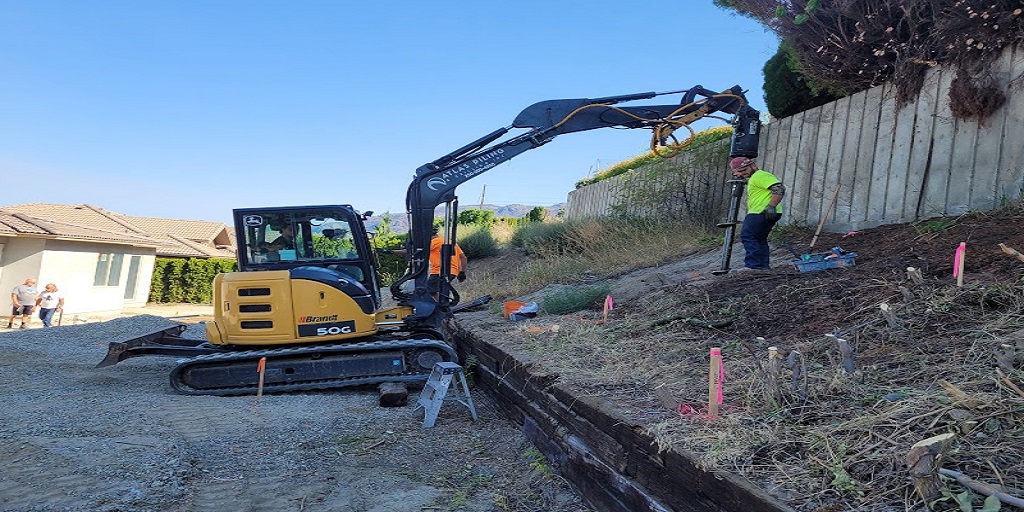
When new construction methods start making waves across multiple industries, there’s often a question of staying power. Are they a temporary fix or a lasting improvement? In the case of helical pile solutions, the verdict is becoming increasingly clear—they’re not just here to stay, they’re rewriting how professionals approach foundational challenges.
What began as a niche solution for difficult soil conditions is now becoming the go-to strategy for projects ranging from residential builds to commercial expansions and infrastructure upgrades. Engineers, contractors, and developers are relying on helical systems not because they’re new, but because they’re more efficient, adaptable, and reliable than many traditional alternatives.
Speed That Doesn’t Sacrifice Quality
A major reason more projects are turning to helical piles is their ability to speed up construction timelines without sacrificing strength. Unlike traditional concrete foundations—which involve digging, building forms, and waiting for the concrete to cure—helical piles can often be installed and ready to bear loads within just one day.
This speed translates directly into cost savings—fewer labor hours, minimal weather delays, and reduced downtime across the entire build. For fast-track developments or time-sensitive repairs, this difference isn’t minor—it’s transformational.
Versatility Across Site Conditions
Every build site comes with its own set of challenges—soft soils, high water tables, frost zones, or restricted access. Helical systems are inherently designed to adapt to such variables. Whether it’s a tight urban infill project or a remote industrial installation, helical pile solutions can often be installed with compact equipment and minimal disruption to the environment.
This flexibility has opened doors for applications that were once considered logistically difficult or cost-prohibitive. Helical systems make it easier to work within sensitive landscapes, heritage zones, and busy neighborhoods—all while maintaining engineering precision.
Performance That’s Backed by Data
In construction, making assumptions can lead to expensive mistakes. That’s why the real-time torque feedback provided by helical piles during installation is such a game-changer. It allows engineers and contractors to confirm, on the spot, that each pile is achieving the required load-bearing capacity as it’s installed.
This level of accountability ensures confidence in the system from the moment of installation. There’s no need to wait for post-cure strength tests or schedule additional inspections to verify performance. The data is there—on-site, on record, and in real time.
Ideal for Modern Building Demands
As design preferences and sustainability standards continue to evolve, helical pile solutions are stepping into more high-profile roles. They’re being used to support solar farms, modular housing, elevated walkways, commercial expansions, and even seismic retrofitting.
In many of these cases, their low environmental footprint is as important as their load capacity. Minimal soil displacement, reduced concrete use, and easy removability all contribute to more environmentally conscious construction practices—something increasingly valued in both public and private sector builds.
Long-Term Value That Goes Beyond the Build
Choosing the right foundation system isn’t just about what happens during installation—it’s about long-term reliability. Helical systems have proven performance across climates and building types. They resist uplift forces, frost heave, and settlement, often outperforming conventional foundations in areas with seasonal ground movement.
They also offer simplified inspection and maintenance procedures. If future modifications are required—such as lifting a structure, reinforcing a section, or adding to the footprint—helical foundations can often be adjusted with minimal intrusion, saving time and money on renovations or repairs.