The rapid growth of additive manufacturing has sparked curiosity, innovation, and, unfortunately, plenty of confusion. Nowhere is this more apparent than in the automotive world, where 3D printed car parts are becoming more and more common. While the technology has already proven itself in racing, restoration, prototyping, and even small batch production, many people still hold onto outdated assumptions about what 3D printed parts can and cannot do.
Myth 1: 3D Printed Parts Are Weak
One of the most common myths is that 3D printed parts are flimsy or fragile. This misconception usually comes from early hobby level printers and simple plastic filaments that were never meant for demanding automotive use. The reality is dramatically different today. Modern machines can print with advanced thermoplastics, carbon fiber reinforced materials, and even metal.
These materials are engineered for durability, precision, and long term performance.
Professional grade 3D printing can produce components strong enough for a variety of applications. When the right material is paired with the right design, a 3D printed part can be just as strong as a traditionally manufactured component.
Myth 2: 3D Printing Is Only Useful for Prototypes
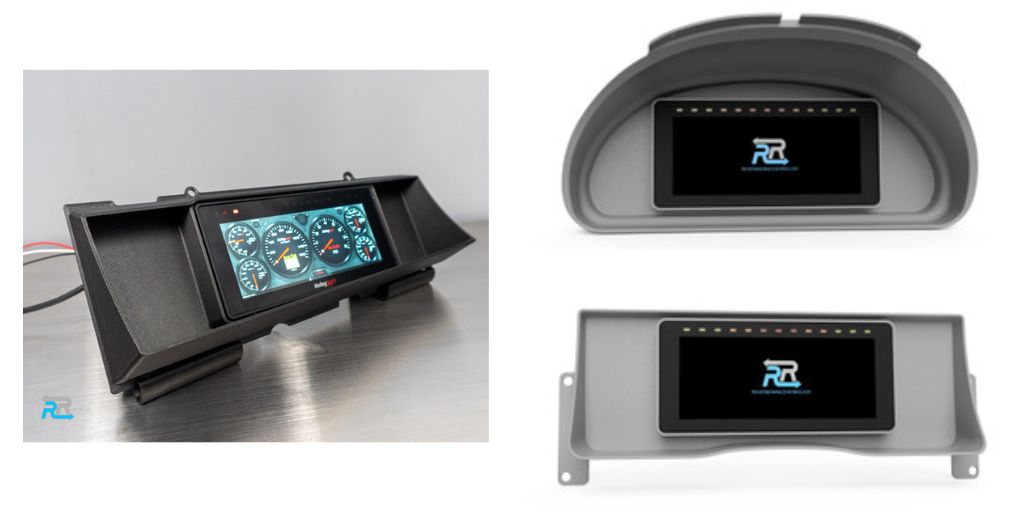
Many people believe 3D printing is limited to one off prototypes, but this is no longer true. Prototypes are certainly a big part of the technology, but small batch and even production ready parts are now created through additive manufacturing. Because 3D printing does not require expensive tooling, it is ideal for low volume automotive parts such as custom bezels, interior switches, mounts, and rare replacement pieces that would otherwise be hard to source.
Restorers and car owners who need a discontinued part can have it recreated with incredible accuracy. Enthusiasts who want a custom modification or a part that never existed from the factory can design and print it. Racing teams use additive manufacturing to produce lightweight components that improve performance without sacrificing strength. The technology is versatile and continues to grow beyond the prototype stage.
Myth 3: 3D Printed Parts Do Not Fit Properly
Fitment issues were once a concern, but modern 3D scanning and modeling tools have revolutionized how custom parts are produced. Scanners can capture precise measurements of a vehicle, allowing designers to create parts tailored to exact dimensions. This results in parts that fit perfectly on the first try, often better than mass produced components.
The ability to take a full scan of a component means that designers can test parts digitally before printing, which eliminates guesswork. Whether it is a dashboard bezel, a wire harness clip, or a custom intake duct, the finished product can match the vehicle with precision. In many cases, 3D printed parts offer a better fit than aftermarket components made from generic templates.
Myth 4: 3D Printing Cannot Handle Automotive Environments
Automotive environments can be harsh with vibration, heat, and exposure to fluids. Many assume that 3D printed materials cannot withstand these conditions. In reality, the materials used today are far more capable than early printing plastics.
Heat resistant polymers, reinforced composites, and high strength resins can perform reliably. Designers can also optimize parts for specific environments by adjusting the internal structure, infill, and orientation. A properly designed 3D printed part is engineered to handle the job it is created for, just like any other manufactured component.
The Future of 3D Printed Car Parts
As more shops and manufacturers adopt 3D printing, the myths surrounding the technology continue to fade. Car owners want precise parts, fast turnarounds, and customization. Additive manufacturing makes all of that possible with accuracy that improves each year.
By understanding the reality behind these common misconceptions, drivers and builders can take advantage of what 3D printed components truly offer. From perfect fit replacements to innovative custom upgrades, this technology has become a powerful tool that goes far beyond the myths.
For more information about Gmt800 Parts and 300zx Dash Please visit : Reversion Raceworks