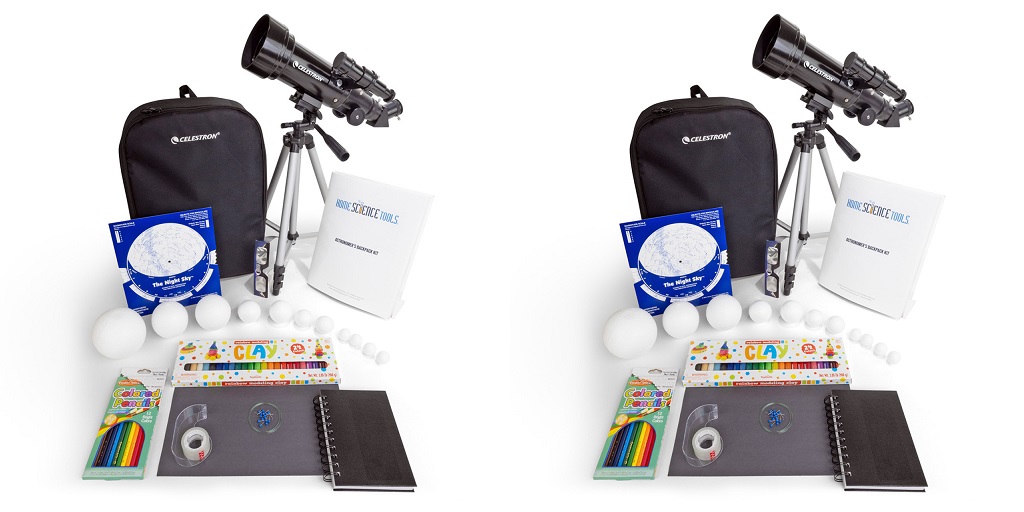
In the market for a telescope for kids? You might think it’s simpler than buying one for adults, but there are a few key considerations to keep in mind that can make the process a little overwhelming.
The good news is that you don’t need advanced astronomy skills to pick a great starter telescope. What matters most is choosing something that fits a child’s curiosity, attention span, and comfort level while still giving them a chance to explore real celestial sights. Here’s how to choose the best telescope for kids:
What do Kids Need in a Telescope?
Kids don’t need a high-end, professional-grade telescope to enjoy the sky. What they really need is a tool that’s easy to use and helps them see real details on the Moon, planets, and bright deep-sky objects. If a telescope feels too heavy, too complicated, or too delicate, it’s more likely to end up gathering dust. A simple setup encourages them to explore freely without feeling overwhelmed.
Choose the Right Telescope Type
Most kid-friendly telescopes fall into three categories: refractors, reflectors, and compound designs. Refractor telescopes use lenses and tend to be the easiest for beginners because they require little maintenance. They’re great for crisp views of the Moon and planets. Reflectors use mirrors instead of lenses, and while they often provide brighter views for the price, they usually need occasional adjustments. Compound telescopes mix the two technologies, but they’re generally more expensive and not always ideal for kids just starting out.
Many parents lean toward refractors simply because they’re sturdy and intuitive. You point, you focus, and you’re ready to explore. A small reflector can also be a wonderful option for older kids who enjoy hands-on learning.
Consider Magnification and Aperture
It’s easy to get distracted by the big magnification numbers written on telescope boxes, but magnification isn’t the star of the show. Aperture is the real hero, which is the diameter of the telescope’s main lens or mirror. A larger aperture gathers more light, making celestial objects look clearer and brighter.
An aperture in the range of 60 mm to 80 mm for refractors or 100 mm to 130 mm for reflectors usually works well for kids. These sizes keep the telescope light and manageable while still delivering rewarding views. A huge telescope might seem impressive at first, but if it’s too heavy to move or too tricky to aim, your child’s enthusiasm for the activity can end up fading fast.
Pick a Mount That Makes Observing Easy
The mount is the part of the telescope that supports it and allows it to move. For children, a stable, simple mount makes the experience far more enjoyable. An altazimuth mount, which moves up-and-down and left-and-right, is often perfect for beginners because it’s easy to understand. Equatorial mounts are designed to track the stars more precisely, but they have a steeper learning curve and may frustrate younger users.
A wobbly mount is one of the quickest ways to ruin a young observer’s excitement. Choosing something sturdy helps keep the view steady, especially when a child is trying to focus on the Moon or a bright planet.
Look at Portability and Overall Ease of Use
Kids love to move around, and the best telescope for them should be easy to carry from the bedroom to the backyard without a struggle. A compact design makes spontaneous stargazing possible, whether it’s on a camping trip or during a clear evening at home. Simple assembly and quick setup are also valuable, especially for younger kids who may lose interest if there are too many steps before they can look through the eyepiece.
Find a Telescope for Your Kids on Home Science Tools
Home Science Tools is the best place to find a telescope for kids! They carry offerings that are suitable for children aged 5 and up. To view their collection, visit the Home Science Tools website now.