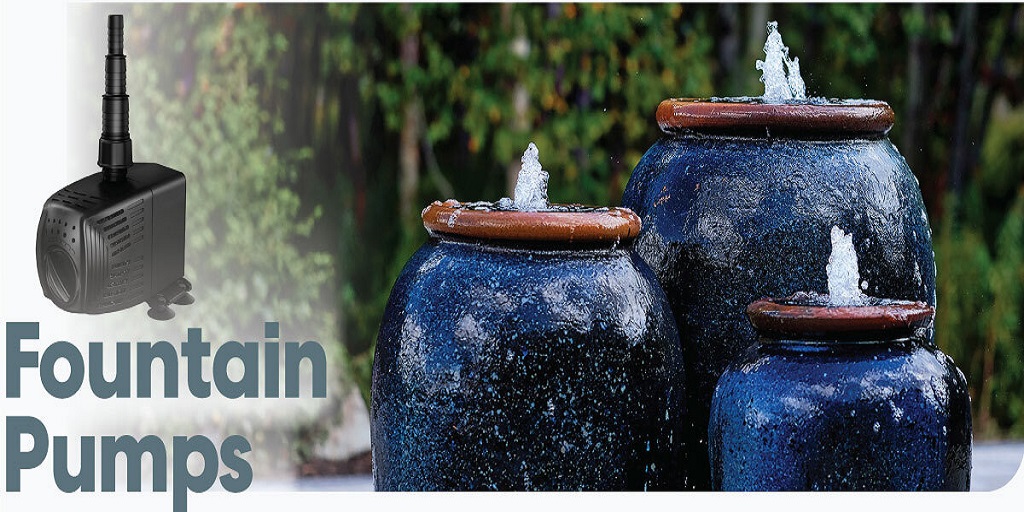
Setting up a water feature in your home can add a sense of tranquility and beauty to your space. However, choosing the right fountain pump is crucial to ensuring it operates smoothly and as intended. The wrong pump can result in either too much water gushing out or too little flow, making the water feature ineffective or messy.
To avoid these issues, it’s important to understand key factors such as flow rate, head height, and the specific requirements of your water feature. In this guide, we’ll walk you through how to choose the right fountain pump to keep your water feature running efficiently.
Understanding Flow Rate and Head Height
When choosing a fountain pump, there are two important numbers you need to consider: liters per hour (L/h) and head height.
Liters per Hour (Flow Rate)
This number indicates how much water the pump can circulate in one hour. A higher flow rate means the pump can move more water, which is ideal for larger water features. For smaller water features, such as tabletop fountains, a lower flow rate is more appropriate to avoid excessive water movement.
Head Height (Lift Capacity)
The head height refers to how high the pump can push water vertically. Every pump has a maximum head height, which means it can only lift water up to a certain level before losing efficiency. As the height increases, the flow rate decreases, meaning the higher you need the water to go, the less volume will be pumped.
Measuring Your Water Feature
Before purchasing a pump, measure the total height that the pump needs to push the water. This is known as the head of your water feature. The head height is the vertical distance from the surface of the water in the basin or reservoir to the highest point where the water will flow or spray out of the feature.
This measurement will help you choose a pump that can handle the required lift. If you select a pump with insufficient head height, it will struggle to circulate the water properly.
If the pump has too much power for a small water feature, you might end up with water gushing out uncontrollably. In these cases, you can either use a pump with a flow adjustment feature or install a worm gear hose clamp to restrict the flow and bring it down to a suitable level.
Selecting the Right Pump Size
Different pumps are designed for different water features, and size matters. To give you a sense of scale, smaller pumps are capable of lifting water to a modest height (around 0.6 meters), while medium-sized pumps can reach about 1.2 meters.
Larger pumps may be able to lift water up to 1.6 meters or more. For very tall water features, such as cascading fountains or multi-level setups, pumps with even greater head heights are available, reaching up to 5 meters or more.
For small fountains, choose a pump with a lower flow rate and head height. These pumps are ideal for desktop fountains, small garden fountains, or features that don’t require significant water movement.
For medium water features, go for a pump that can handle a head height of around 1 to 1.5 meters with a moderate flow rate. Large water features require more complex setups, so you’ll need a pump that can move a high volume of water over a greater height.
Additional Features to Consider
Some pumps come with additional features like adjustable flow dials that allow you to control the flow rate. While the range of adjustment may not be significant, it can help fine-tune the water flow to better suit your water feature.
Pumps with UV protection or algae inhibitors can also be beneficial for outdoor water features, helping to keep the water clean and clear.
Find the One That Suits Your Property
Choosing the right fountain pump is crucial to the success of your water feature.Pay attention to the size of your water feature and other practical considerations, such as your budget and property size. With the right pump in place, your water feature will bring beauty and serenity to your home for years to come.