In areas with compressible or soft soils, negative skin friction can quietly become one of the biggest challenges for foundation stability. This downward drag on deep foundations, caused by soil settlement or consolidation, can impose significant additional loads on the structure—sometimes beyond what it was originally designed to handle. For engineers and contractors, the focus isn’t just on bearing capacity anymore but also on ensuring that their foundation systems can effectively resist or minimize these drag forces. That’s where the helical pile foundation system demonstrates a key advantage.
Understanding the Nature of Negative Skin Friction
Negative skin friction occurs when the surrounding soil settles relative to the pile shaft. This often happens in areas with newly filled ground, organic soils, or clays that undergo consolidation after construction. As the soil moves downward, it drags along the surface of the pile, creating an additional downward force—essentially trying to pull the pile deeper into the ground.
This “down drag” increases the load the pile must support, effectively reducing its available capacity. If not properly managed, this can lead to differential settlement, overstressing of piles, or even structural instability. For these reasons, controlling or mitigating negative skin friction is a high priority in foundation design for problematic soils.
How Helical Piles Address Negative Skin Friction
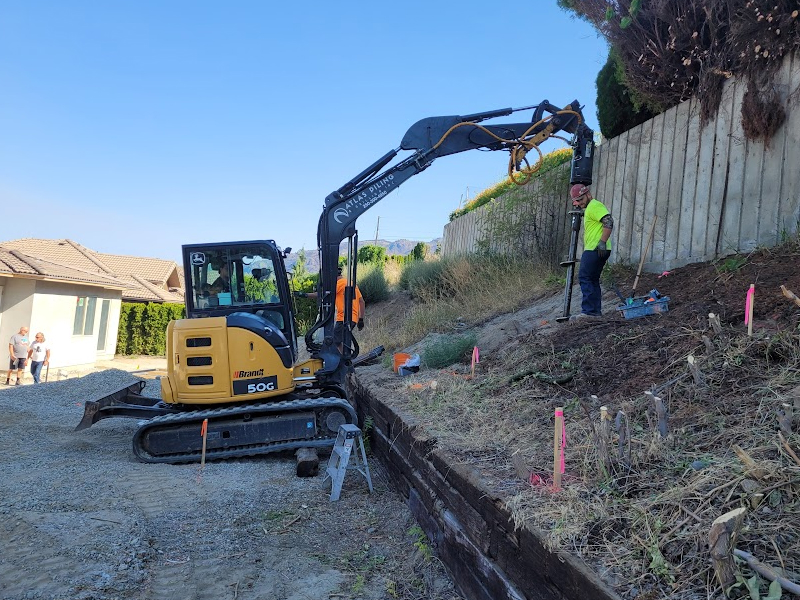
The geometry and installation method of the helical pile system offer a built-in defense against negative skin friction. Unlike traditional driven or cast-in-place piles, helical piles are screwed into the ground using hydraulic torque, creating a clean, controlled installation with minimal soil displacement. This installation technique helps maintain soil structure and prevents excessive disturbance, which can reduce the likelihood of soil settlement around the pile shaft.
Additionally, because the helical pile transfers load primarily through its helical plates—anchored deep into more stable soil layers—the shaft experiences less frictional drag compared to friction piles. The load-bearing mechanism is mostly end-bearing and uplift-resisting, which significantly limits the effect of negative skin friction on the overall performance of the foundation.
Mitigation Through Proper Design and Installation
The performance of a helical pile system against negative skin friction depends heavily on design precision. Engineers typically design the shaft diameter, pitch, and helix configuration based on detailed soil profiles. This ensures the bearing plates are positioned below zones of potential settlement, often penetrating into dense strata that are less prone to movement.
Protective coatings can also be applied to reduce adhesion between the pile surface and the surrounding soil, further minimizing drag forces. In certain applications, a sleeved or unbonded upper section can be used to decouple the pile shaft from the settling soil, preventing load transfer due to negative skin friction.
Moreover, during installation, torque readings serve as a reliable indicator of soil conditions and bearing capacity. This real-time data allows contractors to confirm that each helical pile reaches the intended design depth and load-bearing strata, reducing the risk of performance issues later on.
A Smarter Choice for Problem Soils
For engineers, developers, and builders facing the realities of soft or compressible soils, helical pile foundations offer both peace of mind and technical reliability. Their ability to bypass problematic layers, anchor into competent strata, and resist the effects of negative skin friction makes them one of the most adaptable deep foundation solutions available today.
As construction challenges grow increasingly complex with changing soil conditions, the engineering community continues to lean on the proven benefits of helical technology.
For More Information About Drilling Company Bc and Industrial Drilling British Columbia Please Visit: ATLAS PILING.