When you want to use a water filtration system and are searching for alternatives, you have to understand that there are many options. However, you have to know what would work best for your home, business, and lifestyle.
Here are some ways you could make the best choice for your water filtration system and choose the best filters that will meet your needs.
What Kind of Water Do You Prefer?
There are different kinds of filtered water, and they could come from different sources. They could come directly from the tap, the countertop, a container from a water supplier, or under the counter (from reverse osmosis or carbon filters).
If you get your water directly from the source without any filters, your water supply could include contaminants such as industrial pollutants, urban runoff, byproducts of other chemicals and pharmaceutical products.
But if you use a filter for your water supply, you can ensure that the water from your sources (even from the tap) is free from such contaminants. Most importantly, your water is free from chemicals that might cause diseases such as cancer.
You can choose filters for the tap, countertop, and under the counter. But there are different ways that these filters work, depending on what kind you choose for your water supply source.
Types of Water Filters
Depending on your water source and where you live, you need to choose a water filter that can deal with other issues such as limescale, chlorine and other water issues that water filtration can resolve. Here are the different kinds of filters you can choose:
Mechanical Filters
These mechanical filters are used to remove sediment, debris or particles through using a barrier. These can simply be a mesh to a ceramic or carbon filter that has a complex pore structure to remove tiny organisms that can be pathogens of diseases.
Often these mechanical filters have a micron rating, which is an indication of the effectiveness of the filters and the size of the debris they can remove from the water. The most common micron ratings are 5 micron, 1 micron, and 0.5 micron.
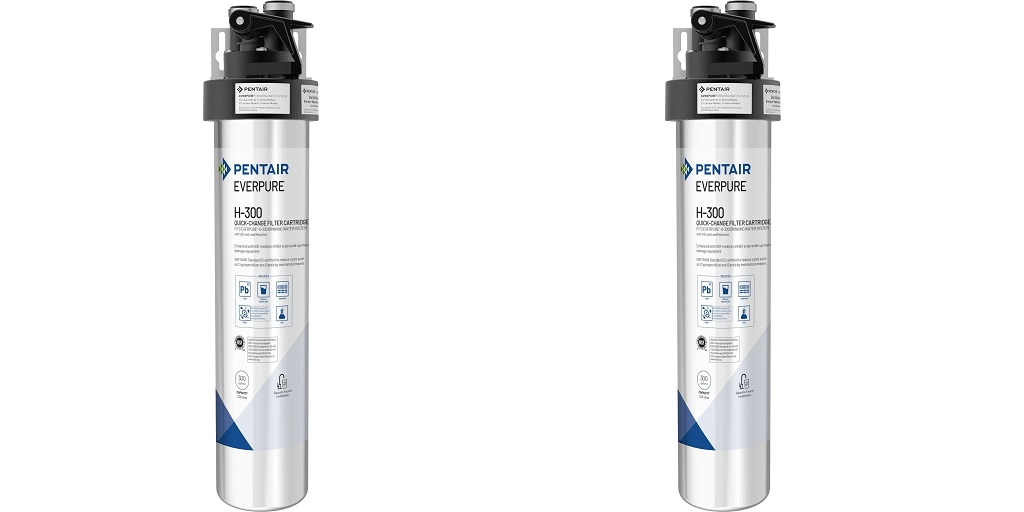
A rating of five will remove particles that are visible to the naked eye, while 0.5 will remove microscopic cysts and pathogens. Everpure’s H300 water filter has a micron rating of 0.5, which means that it can remove cysts and other microorganisms.
Absorption Filters
These are filters that use carbon, which is effective in catching contaminants in the water. Carbon is very effective in removing impurities, as it has a surface that traps any impurities including chlorine.
Most absorption filters use granular activated carbon (GAC) which can also remove tastes and odors. These filters can be expensive, as they sometimes use carbon blocks that also have a micron rating for particle removal.
Some absorption filters also use coconut shells and wood, as they are also effective in removing debris and pollutants. . Everpure water filters, such as H300 water filters, can also absorb chlorine and other sulfides.
Sequestration
This filter chemically isolates substances. This filter is very useful in areas where limescale and corrosion are common. They can separate calcium and magnesium minerals to prevent corrosion. However, these filters only limit these minerals, and do not soften them.
If you live in an area where the supply is from a hard water source, this filter can be useful. But you might need another filter to soften the water.
Ion Exchange
This is a filter that can soften hard water. It exchanges magnesium and calcium ions to other ions, such as sodium or hydrogen. This filter can remove the minerals that cause limescale and corrosion, but also soften the water.
For restaurants and cafes, an ion exchange filter is suitable especially when they use commercial coffee machines.
Reverse Osmosis
This filter system removes dissolved inorganic solids such as calcium by forcing it through a membrane through water pressure. This makes the water pass through the membrane but blocks the contaminants.
This is often combined with other filters so that the water will be purified and with almost no contaminants or pollutants remaining.
Choose the Right Water Filter
Understanding these options can make it easier for you to choose which one suits your home or business. Understanding where you get your water supply can make it easier, but knowing which filter suits your water sources can make it cleaner and much healthier.