For those of you that like to do your own tinkering and research, you’re probably familiar with marine battery cable, and the fact that it is manufactured to different specifics from other leads for batteries, such as those used for cars on dry land. One of the main reasons for this difference in manufacturing is because of the density of corrosive agents with which marine cables will come into contact.
There is not simply one. There are several different agents that will cause corrosion in marine battery cables, not the least of which is seawater. On board a boat or a ship, you are liable to come into contact with a range of chemical elements that can be damaging to electrical infrastructure, including moisture, acids, alkalis, salts, and of course, gasoline and oil.
It should come as a surprise to exactly no one that water in general, and saltwater in specific, is a highly corrosive agent that will lay waste to exposed copper, which is a reactive metal. When copper oxidizes, it produces that recognizable blue patina that characterizes weathered blue fixtures.
Both freshwater and saltwater are corrosive, but saltwater typically has a higher density of dissolved chloride ions that are better at penetrating the surface of a metal and causing corrosion. Freshwater causes discoloration and oxidation as well, but at a slower pace. Because of this, marine battery cables must be protected from these elements.
Acids and alkali materials can also potentially cause corrosion, but even if they themselves are not reactive with the copper conductors of the cable, their presence can strip away finishes or insulation that otherwise would protect the wire strands underneath from corrosion. Additionally, the products of their reactions can be corrosive to copper, depending on their chemical formula.
In addition, there are the express issues associated with oil and gasoline. These petrochemicals, though they may not directly cause corrosion to electrical insulators themselves, present a different issue. Many electrical conductors are insulated with materials that are resistant to many corrosive agents as well as to the weather. However, some of these polymers are not stable in the face of oil or gas. In some instances, petroleum products can even dissolve them, exposing the conductors underneath to a higher risk of corrosion.
In short, there is nothing short about the list of corrosive agents that can assail marine battery cables on any given day, but quality marine cables will be well equipped to contend with these deleterious influences.
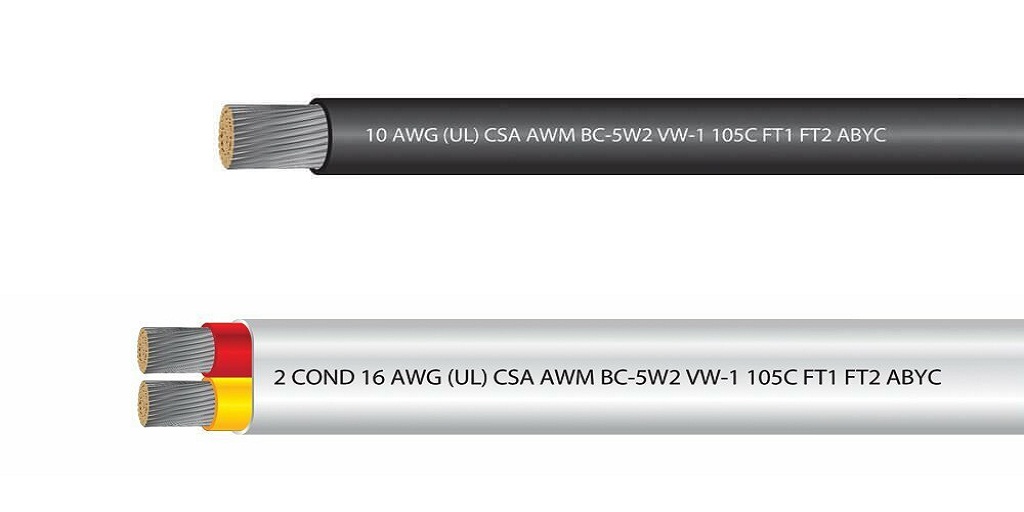
You may notice that the conductors themselves appear silvery, but this is not due to the presence of silver. It is actually due to the presence of tin. In order to protect the copper stranding against some of the corrosive agents mentioned in this article, high quality marine wire is made with a high strand count of individually tinned copper conductors. The tin plated copper conductors of marine grade battery cable is well-equipped to resist corrosion, and is relatively effective at repelling water, including seawater, as well as some acids and bases.
As far as the insulation with which these marine wires and cables are paired, it is typically weather resistant, but most importantly, resistant to oil, gasoline and other greases, like marine grease, that are commonly found aboard vessels. This special resistance to petrochemicals helps the insulation last longer, better protecting it from the other elements mentioned here.
If you want to learn more about the special traits of a well-designed marine battery cable, look no farther than EWCS Wire at EWCSWire.com. Check out their collection of marine grade and other specialty battery cables, and if you have any questions, contact them at 800-262-1598.