So you want to get into reloading. Hold up there, partner. You can’t just go out, buy powder and a scale, some bullets and primers, a manual, and get to it.
Well, you can, but don’t expect tight groups if you wing your loads, especially the first time around.
There are some critical steps you need to observe, especially if you’re planning on reloading fired brass.
One of these is resizing. This short post will cover what it is and why it matters.
Firing and Brass Stresses
When you fire a gun, the combustion of the propellant charge generates an enormous amount of pressure and therefore force. Much of that force is used to propel the bullet; some of it forces the cartridge casing outward against the chamber walls.
Brass is tough, but not tough enough to withstand the explosive stresses of firing. After firing, brass no longer has its native, virgin dimensions. It has “stretched” a little bit, and the case neck diameter will not be what it was before it was fired – even if it has only expanded ever so slightly.
Consistency and precision are the two elements of cartridge design and loading that make ammo accurate and reliable. Ammunition engineers and ballisticians pore over designs and dimensions ad infinitum before arriving at a viable cartridge design.
In short, a slight amount of variance, even one which is incalculable to the human eye or touch, will have grave consequences for the shooter.
Not grave in the sense that the gun won’t fire – not at all. Grave in the sense that if you reload brass that has not been resized, accuracy can and will suffer in a big way.
To rectify this issue, we must resize each fired cartridge before reloading in order to ensure not only accuracy and consistency but for straight-walled cartridges, to ensure that they will fit within the chamber. As a result, resizing fired brass is mandatory if you expect consistency from your reloads.
But there is another caveat – what about new brass?
Do You Need to Resize New Brass?
There are some shooters that will tell you you don’t need to size virgin brass. Some manufacturers may say the same.
We don’t know what your experience has been, but our recommendation is that you size (or resize) all brass before loading, whether it has been fired or not.
But, you ask “I thought resizing was necessary to bring that case dimensions back to the proper diameter before seating the bullet because firing stretched the case neck? Why, then, would I need to resize virgin brass?”
Good question – the reason is that while virgin brass has never been fired, there could be very minor variations in the case neck dimensions of the factory cartridges. And while they may be good you want them to be as uniform as is mechanically possible.
So, sizing them all before loading with your die will ensure maximum consistency across loads, as well as proper case grip on the bullet, which ensures uniform powder combustion and accuracy.
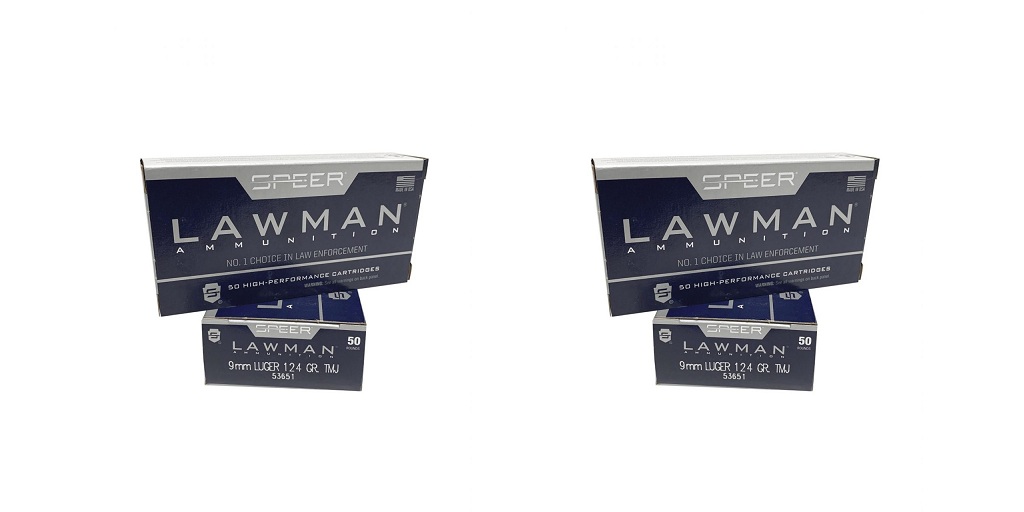
CCI Blazer Brass, FAE, Venom, MAXXTech, and Speer Lawman Ammo: They Can All Be Reloaded
In sum: it’s advisable to size (or resize) all brass prior to reloading. But there’s one more thing to know: you don’t need to buy brass to start reloading. You can just get ammo loaded in quality brass cases, fire that, keep the brass, and reload it.
Consider Federal American Eagle, Venom, CCI Blazer Brass, and Speer Lawman ammo. All are loaded in quality brass cases that can be reloaded – so you get more bang for your buck (if you can please excuse the pun).
And, if there’s no FAE or Speer Lawman ammo on the shelves at your local shop, get it online at Bucking Horse Outpost (BuckingHorseOutpost.com) and you might even save a few dollars in the process.