The milling process involves several steps. One of the most important parts of the milling process are the finishing steps, which typically make pieces easier to handle and involve adding all of the small final details. When it comes to tools for finishing a milled workpiece, chamfer mills are one of the most important cutters in any machinist’s arsenal.
Chamfering is the process of removing material from an edge to create a transitional surface where two sides of a workpiece meet. The most common form of chamfer is a 45 degree angle chamfer along a 90 degree edge, but other angles can also be used.
Many people, even some experienced operators, will mix up the terms chamfer and bevel. While both processes remove material from an edge, chamfering is a partial removal to create an intermediate edge while beveling removes enough material from one side of the edge to leave the two sides meeting at a new angle. A chamfering tool can perform both of these processes thanks to their simple but effective design.
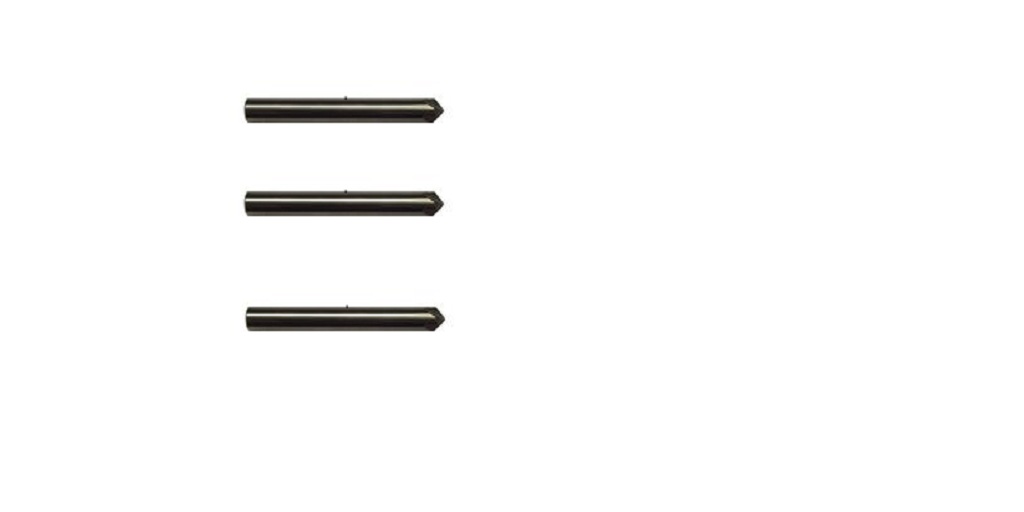
Chamfer mills come in all shapes and sizes, but let’s focus on a simple chamfer mill. Your average chamfering end mill is going to have a simple straight shank terminating in a pointed tip. The tip is lined with small flutes that end without going too far up the shank. This means that all of the tools cutting surfaces can be found in the flutes. Chamfering tools feature a wide variety of point angles, but 90 degree and 60 degree tools are the most common options.
It is important to make sure that you are using the right chamfer cutter for the job that you need to complete. It is important to consider the material that you will be cutting. Steel tools can handle a wide range of materials, but hard materials like steel and cast iron should be milled with carbide tools. You also need to consider the angle of the chamfer and the depth of the chamfer cut to make sure that your tool can reach.
In addition to cutting chamfers and bevels, your chamfer end mills can also be used for a wide range of other tasks. One of the most common uses of a chamfer tool is as a deburring tool. Milling tools usually do a great job of removing material, but sometimes chips are not perfectly removed and sharp burs can be left on the edges of your workpiece. By sending your chamfer mill on a tool path that outlines the borders of your workpiece, you can easily remove all of these burrs in moments. No milling process is perfect, but using these tools can dramatically decrease the time you spend manually deburring.
Chamfer tools can also be used for a few other milling tasks. The points can be used to side mill notches in a workpiece or to make small engravings when finishing a piece. The sharp point can also be used for a few different drilling tasks like countersinking or spot drilling the locations of new holes. Using one tool for all of these different tasks can help cut down on tool changes and speed up production times.
If you need some hard working chamfer mills to perform all of these tasks in your shop, then the tools available at www.onlinecarbide.com are the perfect choice. All of their end mills and drill bits are made in the US using solid carbide. You can find all of their tools at manufacturer direct prices when you visit their website.